


What Material Can You Iron Patches On? A Complete Fabric Guide
How Do Iron Patches Work?
Understanding how iron-on patches work makes it much easier to choose the right fabric and apply them correctly.
Iron-on patches have a layer of heat-activated adhesive on the back. When you press a hot iron onto the patch, the adhesive melts and bonds with the fibers of the fabric beneath it. As the patch cools, the adhesive solidifies and creates a strong bond between the patch and the garment.
The strength of that bond depends on three key factors:
- Temperature: Enough heat is required to fully activate the adhesive.
- Pressure: Firm pressure helps the adhesive penetrate the fabric fibers.
- Time: Holding the heat long enough ensures a complete bond.
What Material Can You Iron Patches On?
Not all fabrics respond the same way to heat and adhesive. Some materials are ideal for iron-on patches, while others require extra care.
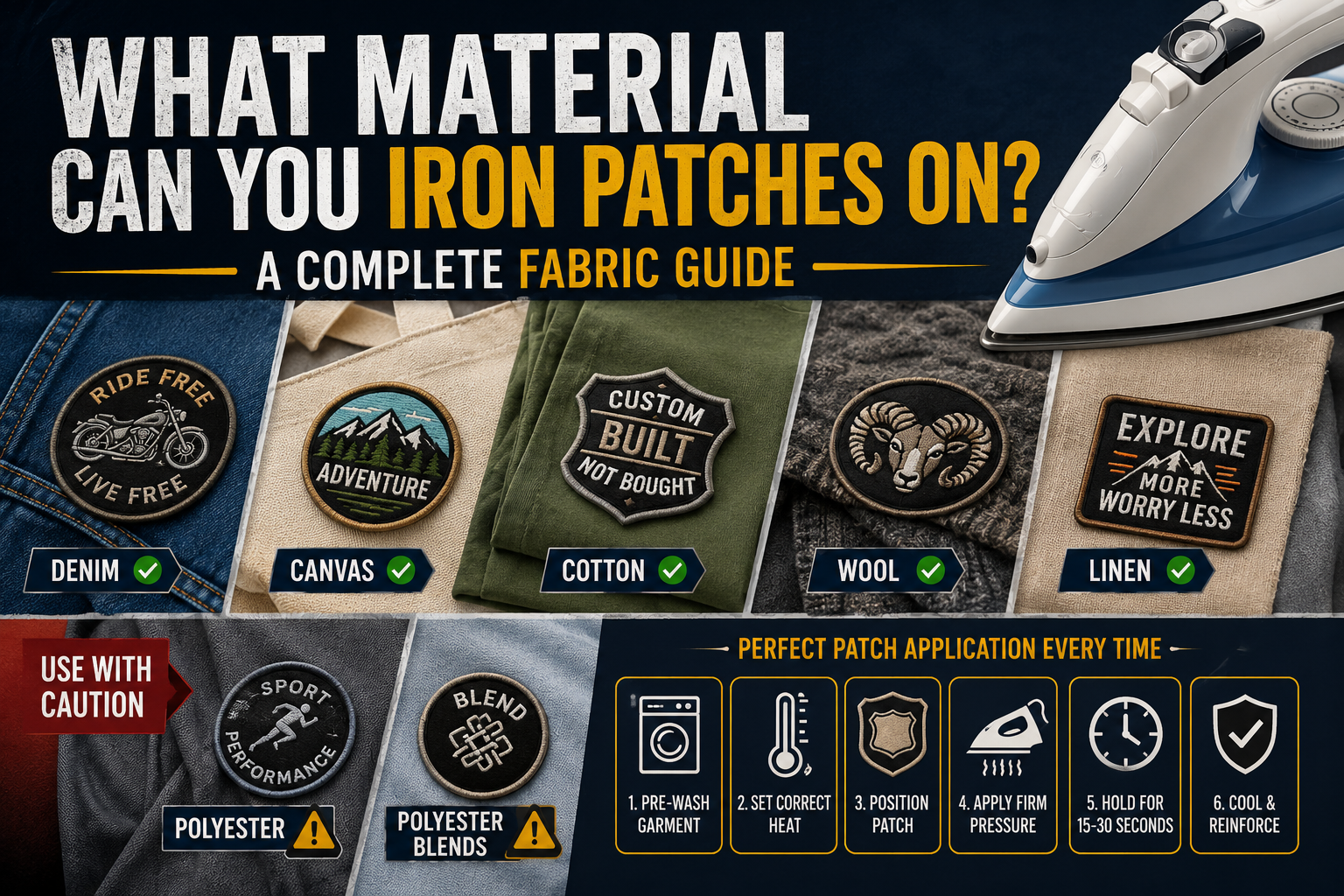
- Cotton: The best fabric for iron-on patches. Cotton handles heat well and allows strong adhesive bonding.
- Denim: Excellent for patches because it is durable, thick, and heat-tolerant.
- Canvas: A reliable option commonly used for hats, bags, and workwear.
- Wool: Compatible with patches when using lower heat and a pressing cloth.
- Linen: Works well but can scorch more easily than cotton, so moderate heat is recommended.
- Cotton-Polyester Blends: Usually compatible if the fabric contains mostly cotton.
Can You Iron Patches on Polyester?
How to iron-on patches on polyester is easily one of the most frequently asked questions, and the honest answer is: with caution.
Polyester has a lower melting point than cotton, meaning excessive heat can damage or distort the fabric. Polyester also tends to have a smoother weave, which can make adhesive bonding less reliable.
If you need to apply patches to polyester:
- Use a low heat setting
- Place a pressing cloth or parchment paper between the iron and the patch
- Apply heat for slightly longer at lower temperature
- Allow the patch to cool completely before testing adhesion
- Consider reinforcing the edges with stitching
For sportswear or stretch polyester fabrics, sewing the patch is usually the more durable option.
What Material Can You Iron Patches On for Cricut?
Cricut iron-on vinyl follows many of the same rules as traditional iron-on patches.
Cotton, canvas, and cotton-blend fabrics are generally the most reliable materials for Cricut projects. Cricut EasyPress machines provide more even heat distribution than standard household irons, which helps improve adhesion on lighter fabrics and polyester blends.
Even with Cricut applications, natural fibers remain the easiest and safest option for long-lasting results.
What Material Do Velcro Patches Stick To?
Velcro patches work differently from iron-on patches because they attach to loop material rather than using heat adhesive.
Velcro patches typically stick to:
- Tactical gear with loop panels
- Military bags and vests
- Loop-side Velcro sewn onto garments
- Some fleece fabrics with naturally looped surfaces
If the garment does not already have a loop panel, one must be sewn on before the Velcro patch can attach properly.
Best Fabric for Iron On Patches
Some fabrics consistently perform better than others for iron-on patch applications.
- 100% Cotton Denim: Ideal durability and adhesion
- 100% Cotton Canvas: Excellent heat resistance and bonding
- Cotton Twill or Jersey: Great for everyday patch use
- Linen: Reliable with proper heat management
- Wool: Good with lower temperatures
- Cotton-Polyester Blends: Effective if mostly cotton
- Polyester: Possible with caution and low heat
How to Iron On Patches Correctly
Even the best patch can fail if applied incorrectly. Following proper application steps greatly improves durability.
Step 1: Pre-Wash the Garment
Wash and dry the garment before applying the patch to remove finishes or residue that could interfere with adhesion.
Step 2: Set the Correct Heat
Adjust the iron based on the fabric type and disable steam.
Step 3: Position the Patch
Place the patch adhesive-side-down exactly where you want it.
Step 4: Protect the Patch
Place a thin cloth or parchment paper over the patch before applying heat.
Step 5: Apply Firm Pressure
Press the iron firmly for 15 to 30 seconds without sliding it around.
Step 6: Let It Cool
Allow the patch to cool completely before testing the bond.
Step 7: Reinforce from the Back
For extra durability, turn the garment inside out and press again from the back side.
Do Iron-On Patches Stay On?
Yes, when applied correctly to compatible fabrics, iron-on patches can last through regular wear and washing for years.
However, durability depends on the fabric type and how much stress the garment experiences. Areas that stretch frequently, such as knees or elbows, may weaken the adhesive bond over time.
For maximum durability, especially on workwear or frequently washed garments, stitching around the patch edges is highly recommended.
Frequently Asked Questions
What material can you iron patches on?
Cotton, denim, canvas, linen, wool, and many cotton-blend fabrics work well for iron-on patches.
Can you iron patches on polyester?
Yes, but polyester requires lower heat and extra caution to avoid melting or scorching the fabric.
What is the best fabric for iron-on patches?
100% cotton denim and canvas are considered the best fabrics because they provide excellent heat tolerance and adhesive bonding.
Do iron-on patches stay on permanently?
They can last for years with proper application, especially when reinforced with stitching.
What material do Velcro patches stick to?
Velcro patches attach to loop-side Velcro panels or compatible looped fabrics.
Final Thoughts
Choosing the right fabric is one of the most important parts of successfully applying iron-on patches. Cotton and denim remain the safest and most reliable options, while polyester and blends require more careful heat management.
For premium custom iron-on patches with durable backing options for every type of fabric, visit Patch Makers Hub.