


How to Iron On Patches on Polyester: The Right Way | Patch Makers Hub
Polyester is one of the trickiest fabrics to work with when it comes to iron on patches. Too much heat and you melt or warp the fabric. Too little heat and the adhesive never fully activates. Getting it right comes down to knowing your settings, your materials, and the right technique.
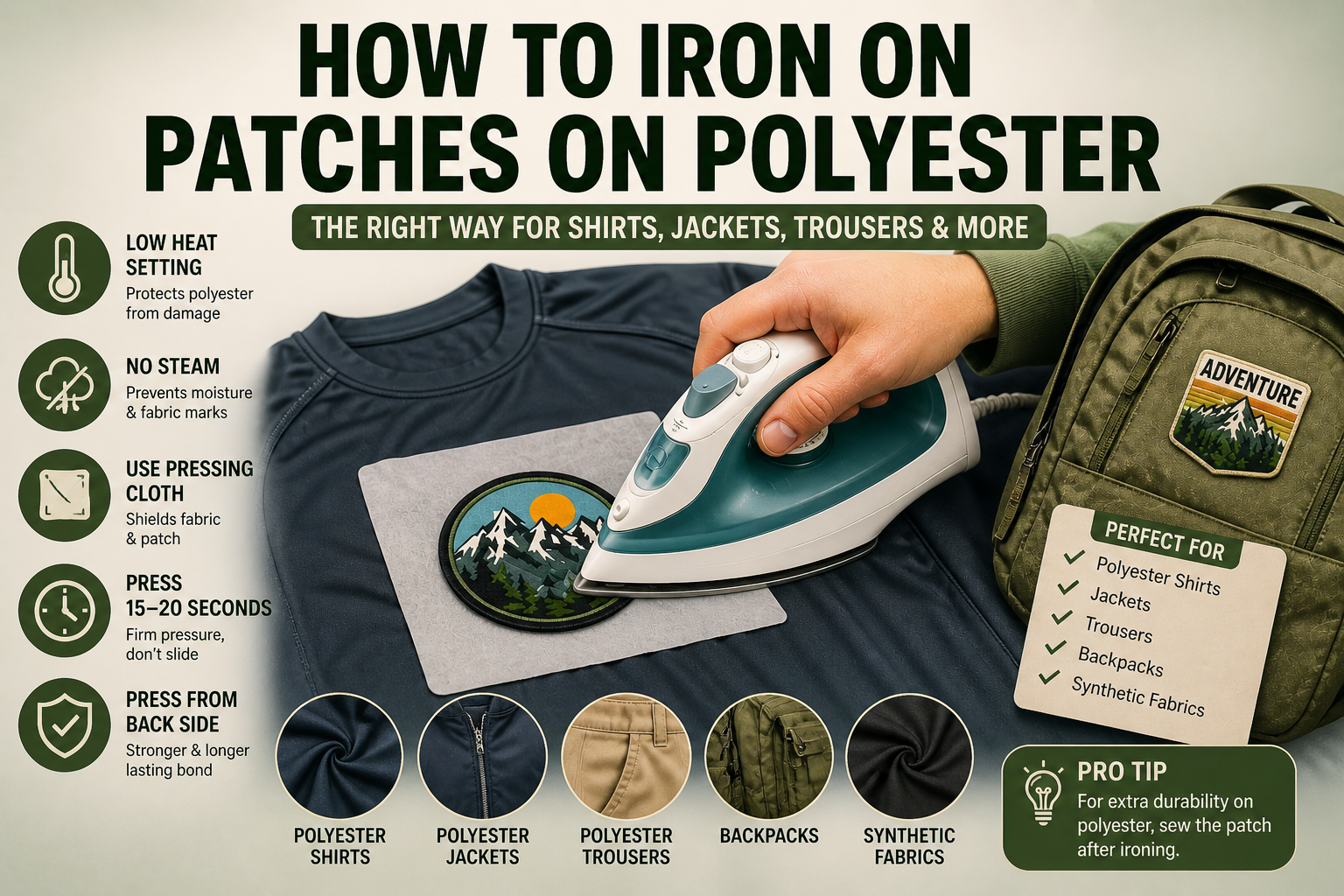
How to Iron On Patches on Polyester
Polyester is one of the trickiest fabrics to work with when it comes to iron on patches. Too much heat and you melt or warp the fabric. Too little heat and the adhesive never fully activates. Getting it right comes down to knowing your settings, your materials, and the right technique.
Here is a full guide to applying custom iron on patches on polyester and synthetic fabrics without ruining your gear.
Why Polyester Requires Extra Care
Polyester is a synthetic, heat-sensitive fabric. Standard iron on patch instructions often call for high heat, which works well on cotton and denim but can scorch, melt, or leave shiny marks on polyester.
This does not mean you cannot apply patches to polyester. It means you need to adjust your approach.
How to Iron On Patches on Polyester Shirt
What you need:
- An iron with adjustable temperature settings
- A pressing cloth (a thin cotton pillowcase works well)
- A flat, hard surface
Steps:
- Wash and dry the polyester shirt. Skip fabric softener as it can interfere with adhesion.
- Set your iron to a low or synthetic setting (around 270°F to 300°F / 130°C to 150°C).
- Turn off the steam function completely.
- Lay the shirt flat and position your patch.
- Place a pressing cloth over the patch.
- Press firmly for 15–20 seconds without sliding.
- Let it cool, then repeat if needed.
- Flip inside out and press from the back for another 15–20 seconds.
For stronger hold, stitching after ironing is recommended.
How to Iron On Patches on Polyester Trousers
The process is the same as shirts, but placement matters more due to seams and curves.
- Use a hard object inside the trouser leg for support
- Apply even pressure for better bonding
- Stitching is recommended for long-term durability
Can You Iron Patches on Polyester Backpack?
This requires extra caution. Many backpacks contain padding or plastic that can be damaged by heat.
- If padded → avoid ironing
- Use fabric glue instead
- If flat fabric → use low heat + pressing cloth
Iron On Patch on Polyester Jacket
Polyester jackets are highly heat-sensitive.
- Always use low heat
- Use pressing cloth
- Check inner lining before pressing
- Insert cloth between layers if needed
- Stitching gives best final result
How to Iron On Patches on Nylon
Nylon is even more heat-sensitive than polyester.
- Ironing is generally not recommended
- Use fabric glue or sewing instead
- If necessary, use lowest heat and test first
Sewing Patches on Polyester
If unsure about heat, sewing is the safest method.
- Use proper needle for synthetic fabric
- Match thread color to patch or garment
- Use tight stitching for clean finish
Cricut Iron On Polyester Temperature
For Cricut iron-on vinyl:
- Temperature: ~270°F (132°C)
- Press time: 15–20 seconds
- Use pressing cloth or Teflon sheet
- Test on scrap fabric first
Quick Recap for Polyester
- Use low heat only
- Always use pressing cloth
- Turn off steam
- Press in short intervals
- Press from back side
- Stitch for extra durability
Frequently Asked Questions
- Can you iron patches on polyester shirts? Yes, using low heat and a pressing cloth.
- Can you iron patches on backpacks? Only if no padding is present.
- What temperature works best? Around 270°F (132°C).
- Is sewing better? Yes, for long-term durability.
Final Thoughts
Working with polyester does not have to be difficult. With the right heat settings and technique, you can apply patches cleanly and confidently. For high-quality patches with strong adhesive backing, visit Patch Makers Hub.