


Merrowed Border vs Embroidered Border: Which One Is Right for Your Custom Patch?
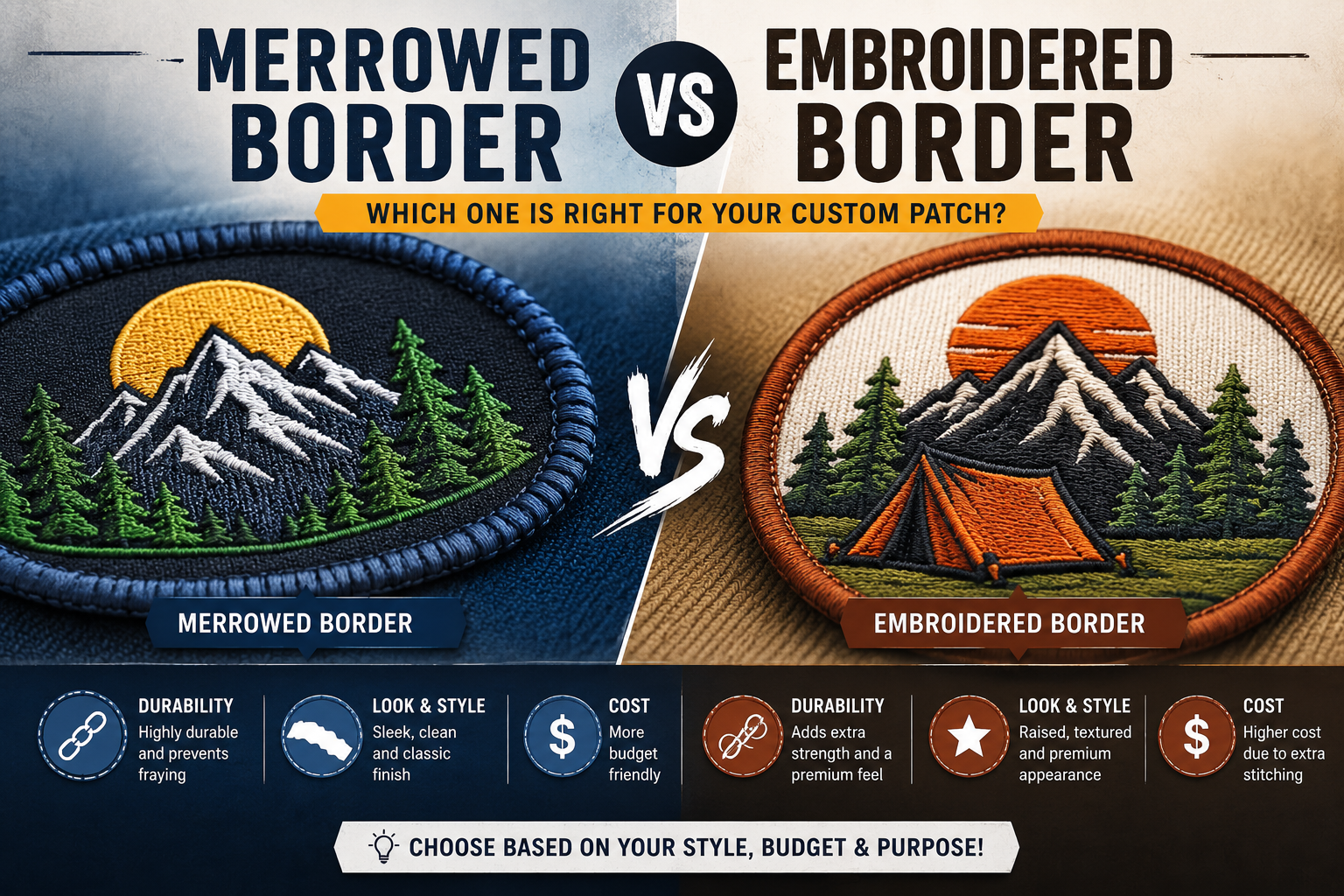
Two border styles dominate the patch world: the merrowed border and the embroidered border. Both look great, but they serve different purposes. If you have ever searched for the difference between a merrowed border and an embroidered border, this guide breaks it down so you can pick the right one for your next order with Patch Makers Hub.
What Is a Merrowed Border?
A merrowed border is a thick, looped stitch that wraps tightly around the outer edge of a patch, creating a raised, rope like frame. It gets its name from the Merrow sewing machine, the equipment originally built to produce this exact stitch style. The result is a bold, defined edge that feels sturdy the moment you touch it.
This border style is the one most people picture when they think of a traditional patch, the kind seen on varsity jackets, military uniforms, and scout sashes.
Where a Merrowed Border Works Best
- Round, oval, square, and rectangular patch shapes
- Uniforms, team gear, and organizational badges
- Designs that call for a classic, retro feel
- Situations where budget and durability matter most
Benefits of a Merrowed Border
- Built to Last: The tight overlock stitch keeps the fabric edge from fraying, even with heavy wear.
- Bold Definition: The raised edge frames your design and makes it pop.
- Vintage Appeal: It carries a nostalgic, old school look that never really goes out of style.
- Lower Cost: It is generally the more affordable border option, especially for bulk orders.
What Is an Embroidered Border?
An embroidered border, sometimes called a hot cut edge, is stitched directly onto the patch itself rather than wrapped around it. A laser cutting step, known as hot cutting, seals the fabric edge afterward to prevent fraying. Because the stitch follows the exact outline of the design, this border can handle shapes a merrowed edge simply cannot.
This is the border of choice for modern logos, lettering, and any patch with an irregular or detailed outline.
Where an Embroidered Border Works Best
- Custom or irregular shapes, including letters, icons, and logos
- Fashion patches, streetwear, and brand merchandise
- Designs with fine detail that need a closer cut
- Projects at Patch Makers Hub where precision matters more than tradition
Merrowed Border vs Embroidered Border: Side by Side
Feature Merrowed Border Embroidered Border Appearance Thick, raised, rounded edge Flat, sleek stitched line Durability Very high, resists fraying naturally Durable once hot cut, needs edge sealing Shape Flexibility Best for standard shapes Works with any shape Style Classic and traditional Modern and minimal Production Time Faster Slightly longer due to precision cutting Cost More budget friendly Slightly higher for complex designs
Merrowing Explained: The Craft Behind the Classic Edge
Merrowing is the process of running a patch's fabric edge through a merrow machine, which locks a thick thread border around the perimeter. Think of it as framing a photograph. The image inside does not change, but the frame protects it and gives it a finished, professional presentation.
This process is why merrowed patches feel so sturdy in hand. The stitch itself is doing structural work, not just decorative work.
Embroidered Border vs Hot Cut: Clearing Up the Confusion
These two terms often get mixed up, so it helps to separate them clearly.
An embroidered border refers to the stitch that outlines the design. A hot cut is the laser cutting technique that trims and seals the patch's fabric edge afterward so it does not unravel. In most cases, an embroidered border patch and a hot cut patch are talking about the same finished product, just describing two different steps in how it is made.
If your shape is simple, you likely do not need to worry about this distinction. If your shape is custom or detailed, both the embroidery step and the hot cut step will be part of your order.
How to Decide Which Border Fits Your Patch
- What shape is your patch? Round, square, or oval designs pair naturally with a merrowed border. Custom cut shapes need an embroidered border.
- Where will the patch be used? Uniforms, teams, and long term wear favor a merrowed border. Fashion lines, promotional merchandise, and modern branding favor an embroidered border.
- What matters more, price or precision? Merrowed borders tend to cost less. Embroidered borders cost slightly more but deliver sharper detail.
- Do you need an unusual outline? If yes, an embroidered border is the only option that will hold that shape properly.
Patch Styles That Pair Well With Each Border
Best Matches for a Merrowed Border
- Woven patches, thanks to their flat, clean texture
- Traditional embroidered patches, since the classic stitch pairs naturally with a classic edge
- Scout and military style patches, which rely on structure and durability
- Standard shaped brand or logo patches done using custom woven patches
Best Matches for an Embroidered Border
- PVC patches, which often use irregular or sculpted shapes
- Die cut patches with sharp angles or unusual silhouettes
- Fashion and streetwear patches, specifically the custom PVC patches
- Applique and sequin patches, which need a clean, low-profile edge
Pros and Cons at a Glance
Merrowed Border Pros
- Strong and long lasting
- Ideal for classic shapes
- More affordable
- Faster to produce
- Naturally fray resistant
Merrowed Border Cons
- Limited to standard shapes
- Bulkier look that may not suit modern branding
Embroidered Border Pros
- Works with any shape
- Clean, modern finish
- Great for detailed artwork
- Fits fashion and promotional use cases well
Embroidered Border Cons
- Slightly higher cost
- Requires hot cutting to prevent fraying
- Takes a bit longer to produce
Frequently Asked Questions
Is a merrowed border more durable than an embroidered border?
A merrowed border is generally the more durable option for standard shapes since the thick overlock stitch naturally resists fraying. An embroidered border can match that durability once it has been properly hot cut, but it depends more on that finishing step.
Can I use a merrowed border on a custom shaped patch?
Not really. A merrowed border needs a continuous, even edge to wrap around, so it works best on circles, ovals, squares, and rectangles. Custom or irregular shapes need an embroidered border instead.
Which border is cheaper, merrowed or embroidered?
A merrowed border is typically the more budget-friendly option, especially for larger orders, since it requires less precision cutting than an embroidered edge.
Does an embroidered border patch need extra care to prevent fraying?
The hot cutting process seals the edge during production, so once your patch arrives, no extra care is needed. Normal washing and handling will not cause fraying.
Why the Right Border Choice Matters
The border might seem like a small production detail, but it shapes the durability, appearance, cost, and versatility of your finished patch. Choosing between a merrowed border and an embroidered border is really about choosing how your patch will represent your brand, team, or project over time.
Whether you want the timeless durability of a merrowed edge or the shape freedom of an embroidered border, Patch Makers Hub can help you get the right finish for your design. Get a custom quote today and let our team match the perfect border to your patch.