


Custom Embroidered Patches for Jackets
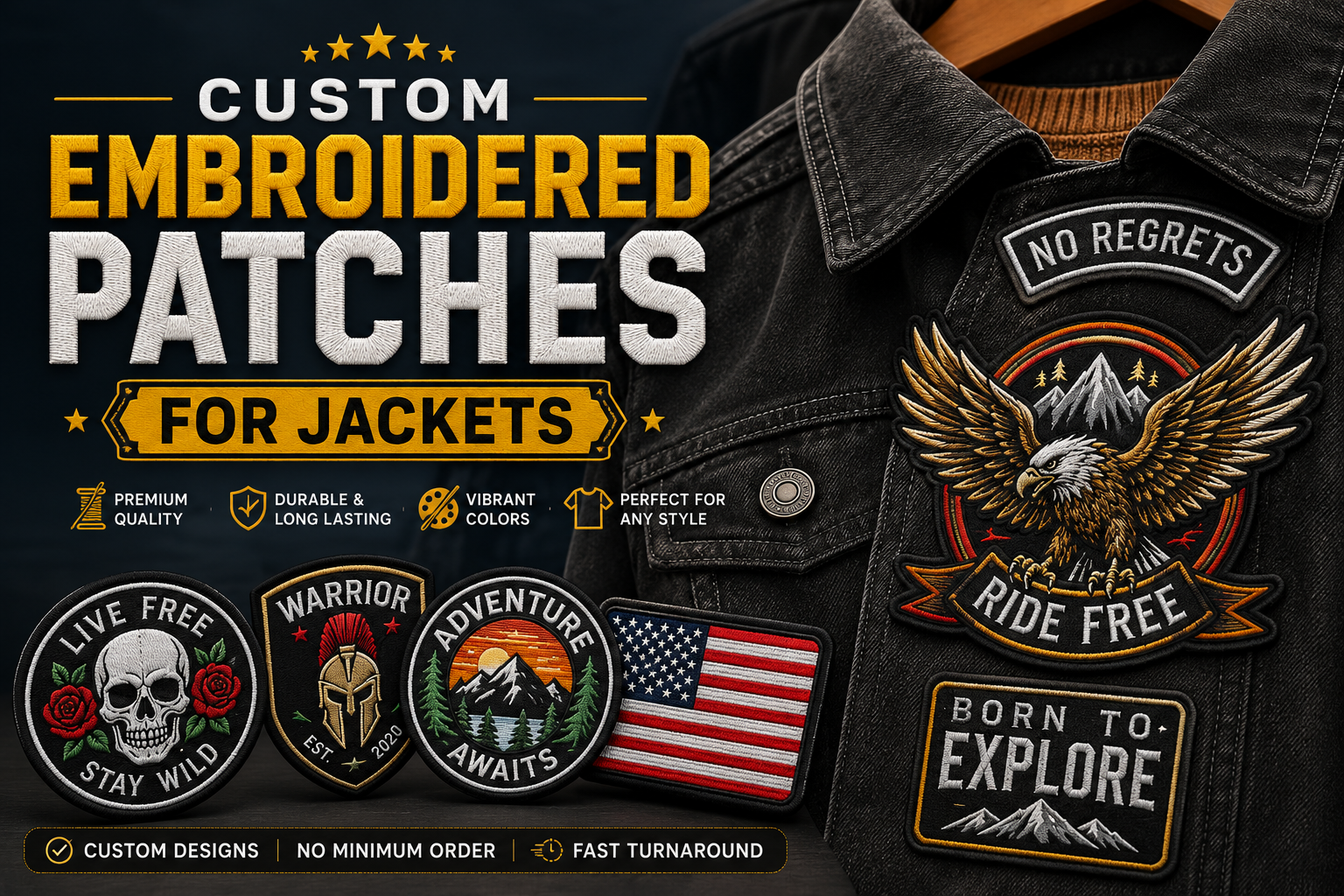
Jackets are one of the most popular surfaces for patch placement, and for good reason. The thick, stable fabric of denim, leather, and canvas jackets gives embroidery thread something solid to grip, so the stitching holds its shape wear after wear. Whether you are outfitting a riding club, a streetwear line, or a team jacket for graduation season, embroidered patches turn a plain jacket into a piece that tells a story.
Why Jackets and Embroidery Work So Well Together
Denim and leather jackets have a naturally rugged texture, and raised embroidery threads complement that texture rather than fighting it. The dimensional stitching catches light differently than the surrounding fabric, which makes logos and emblems pop even from a distance. This is part of why biker jackets, varsity jackets, and work jackets have relied on stitched patches for generations.
Placement Options That Matter
Jacket patches are not one size fits all. Common placements include the left chest for a subtle branded look, the back panel for a bold statement piece, and the sleeves for smaller supporting emblems. Back patches tend to run larger, often four to twelve inches, while chest patches stay closer to two to four inches so they do not overwhelm the garment.
Backing Choices for Long-Term Wear
Because jackets go through repeated wear and washing, backing selection matters. Sew-on backing is the most durable option for jackets that see heavy use, since stitching holds firm through years of movement and weather. Iron-on backing works for lighter use cases but can loosen on textured leather over time. Velcro backing is popular with motorcycle and tactical jackets because it allows patches to be swapped without re-stitching.
Thread Count and Detail Level
A jacket patch usually has more visual real estate than a hat patch, which means finer detail and shading can be worked into the design. Multiple thread colors, subtle color blending through thread density, and layered stitching all read clearly on a jacket-sized patch in a way they might not on something smaller.
Getting the Design Right Before Production
Before any stitching begins, it helps to review a digitized mockup of the artwork. This shows exactly how lines will translate into stitch paths and flags any detail that is too fine for thread to reproduce cleanly. Catching these issues at the mockup stage avoids costly reorders later.
Jacket patches remain one of the most requested formats we produce, and getting the size, backing, and thread detail right the first time makes all the difference in how the finished piece looks and lasts.
Frequently Asked Questions
What size should a jacket back patch be?
Most back patches range from six to twelve inches wide, depending on the jacket size and how much of the back panel you want covered.
Can I put multiple patches on one jacket?
Yes, layering a large back patch with smaller sleeve and chest patches is a common and effective look, especially for club and team jackets.
Which backing lasts longest on leather?
Sew-on backing generally outperforms iron-on adhesive on leather, since heat-activated glue does not always bond well to treated leather surfaces.
If you are planning a full jacket program for a club, business, or team, our team can walk you through sizing, placement, and backing so the final patches hold up exactly as expected. Learn more about how custom embroidered patches are made, or see how custom woven patches compare for finer jacket detailing.
Patch Makers Hub has produced jacket patches for riding clubs, apparel brands, and uniformed teams across a wide range of fabrics and finishes.