


How to Apply Patches on Leather (Without Ruining It)
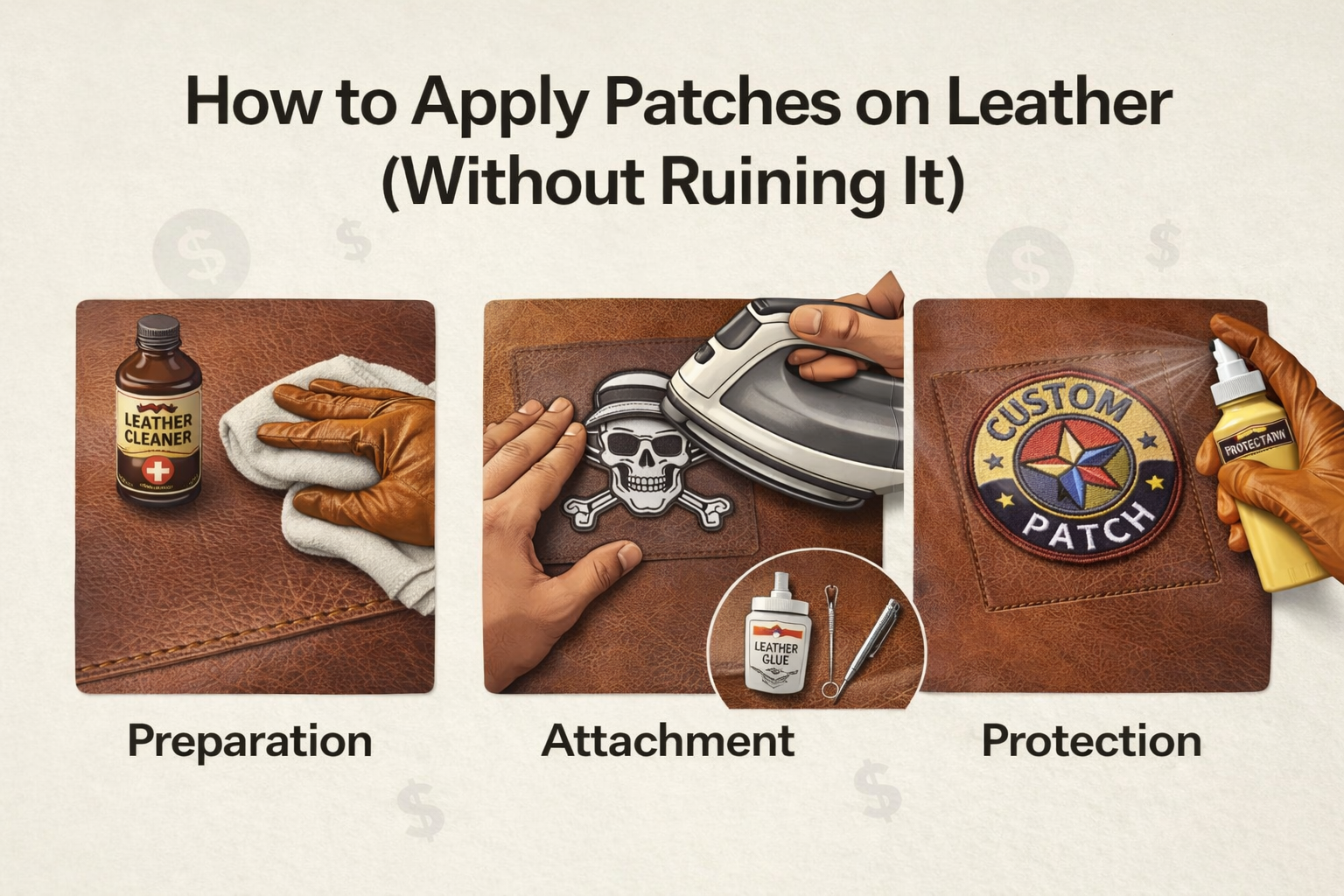
How to Apply Patches on Leather (Without Ruining It)
Leather looks amazing with patches, but applying them the wrong way can cause permanent damage. Whether you're working with jackets, bags, or purses, this guide covers safe and effective methods to apply patches on leather properly.
Can You Put Patches on Leather?
Yes, you can apply patches on leather—but it requires extra care.
Unlike fabrics like cotton or denim:
- Leather doesn’t handle heat well
- It cannot self-heal after needle holes
- Adhesives must be selected carefully
This is why using iron-on patches on leather is generally not recommended.
How to Apply Patches on Leather Jacket
The safest and most effective methods for applying custom leather patches are:
1. Sewing (Most Durable Option)
Best for long-term use and heavy patches.
- Use a leather needle (thicker and sharper)
- Pre-mark holes to prevent cracking
- Stitch slowly with strong thread
- Avoid over-tightening to prevent tearing
This is the best method if you want a permanent result.
2. Glue (No-Sew Method)
Ideal if you want to avoid stitching.
Recommended adhesives:
- Leather-specific adhesive
- Flexible fabric glue
- Contact cement (strongest hold)
Steps:
- Clean the leather surface
- Apply a thin layer of glue
- Press the patch firmly
- Allow it to cure for 24 hours
3. Professional Help
For expensive or delicate items, it’s best to consult a professional to avoid damage.
How to Apply Patches on Leather Bag
For bags, flexibility is more important than strength.
- Use glue or light stitching
- Avoid thick threads that can distort leather
Works well for tote bags, backpacks, and travel bags.
How to Apply Patches on Leather Purse
Purses require extra care due to thinner leather.
- Use lightweight patches
- Apply fabric glue or leather adhesive
- Avoid stitching unless absolutely necessary
This helps prevent damage to delicate materials.
Why Iron-On Patches Don’t Work on Leather
Using heat on leather is risky and often damaging:
- Leather can burn or discolor
- Adhesive backing doesn’t bond properly
- It can permanently ruin the item
If heat must be used, apply very low temperature with a protective cloth—but it is still not recommended. Also, choosing the best packing for patches helps maintain adhesive quality and protects patches from heat damage during storage and shipping.
Pro Tips for Best Results
- Test on a hidden area first
- Choose patch size based on leather thickness
- Avoid repositioning after applying
- Let glue fully cure before use
- Use professionals for high-value items
Best Method Comparison
- Sewing: Best for jackets and heavy patches (High durability, medium risk)
- Glue: Best for bags and purses (Good durability, low risk)
- Iron-on: Not recommended (High risk)
Final Thoughts
Applying patches on leather is completely doable when done correctly. The key is choosing the right method, Be it custom PVC patches or the leather ones, it’s almost the same tactic that gets the job done.
- Want durability? → Sew it
- Want convenience? → Glue it
- Want zero risk? → Go professional
Avoid heat-based methods to keep your leather in perfect condition.
Want Ready-to-Apply Custom Patches?
For high-quality, leather-friendly patches, explore options at Patch Makers Hub. Get durable, premium patches designed to last. Get A Free Quote