


Backing for Patches: Complete Guide to Patch Backing Types
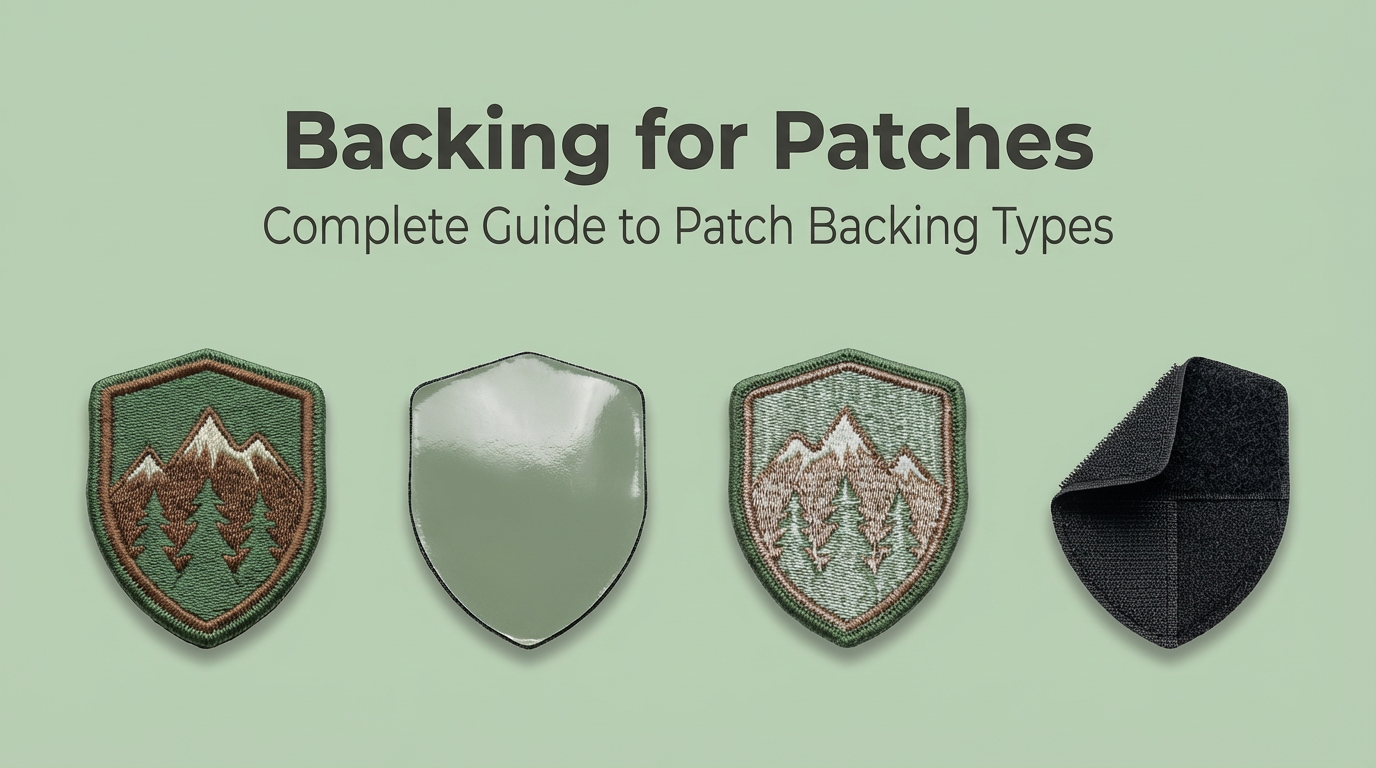
Backing for Patches: Complete Guide to Patch Backing Types
Backing for patches for embroidery plays a crucial role in how your patch performs, lasts, and attaches to garments.
Choosing the best backing for patches ensures durability, flexibility, and ease of application.
Whether you need custom backing for patches for uniforms, fashion, or branding, selecting the right option can make all the difference.
What is Patch Backing?
Patch backing refers to the material or attachment method applied to the back of a patch. It determines how the patch is fixed to fabric and how long it stays in place.
From sew on backing for patches to adhesive backing for patches, each option serves a specific purpose depending on your use case.
Types of Backing for Patches
- Sew-on backing
- Iron-on (heat seal) backing
- Velcro (hook & loop) backing
- Adhesive backing
- Plastic backing
Sew-On Backing for Patches
Sew on backing for patches is the most durable and traditional option. The patch is stitched directly onto fabric, making it ideal for long-term use.
Best For:
- Custom Embroidered Patches for Jackets
- Uniforms and workwear
- Leather jackets and biker vests
- Heavy-duty applications
This is often considered the best backing for patches when durability is the top priority.
Iron-On & Heat Seal Backing
Iron-on backing for embroidery patches, also known as heat seal backing for patches, uses a heat-activated adhesive to bond the patch to fabric.
Best For:
- Casual wear and fashion apparel
- Quick DIY applications
This option is popular for its ease of use, though it may not be as long-lasting as sewing.
Velcro Backing (Hook & Loop)
Velcro backing allows patches to be removed and reused. It’s commonly used for tactical and professional gear.
- Reusable and interchangeable
- Strong grip with flexibility
Adhesive Backing for Patches
Adhesive backing for patches works like a sticker and is best for temporary use.
- Quick peel-and-stick application
- Not suitable for washing or long-term use
Plastic Backing for Patches
Plastic backing for patches adds structure and stiffness to the patch. It doesn’t attach the patch but enhances durability and shape retention.
- Improves patch strength
- Prevents bending or curling
Backing for Patches: Key Differences
| Backing Type | Durability | Application | Best Use |
|---|---|---|---|
| Sew-On | High | Stitching | Uniforms, leather |
| Iron-On / Heat Seal | Medium | Heat press | Casual wear |
| Velcro | High | Hook & loop | Tactical gear |
| Adhesive | Low | Peel & stick | Temporary use |
| Plastic | Supportive | Backing layer | Shape retention |
Best Backing Based on Patch Type
- Custom Embroidered Patches – best with sew-on or Velcro backing
- Custom Woven Patches – ideal with iron-on backing
- Custom Leather Patches – best with sew-on backing
How to Choose the Best Backing for Patches
- Durability: Choose sew-on backing
- Ease of use: Choose iron-on backing
- Flexibility: Choose Velcro backing
- Temporary use: Choose adhesive backing
The right custom backing for patches depends on how and where your patch will be used.
Types of Backing for Glow-in-the-Dark Embroidered Patches
Choose the perfect backing option for your glow-in-the-dark embroidered patches based on how you plan to use them. We offer sew-on, iron-on, Velcro, adhesive, and plastic backing options to match different apparel, uniforms, bags, hats, and accessories while ensuring durability and easy application.
Common Mistakes to Avoid
- Using iron-on backing on leather
- Choosing adhesive for long-term use
- Ignoring fabric compatibility
Get High-Quality Custom Patches
At Patch Makers Hub, we provide the best backing options tailored to your needs.
From embroidery to woven and leather patches, we ensure premium quality with the right backing for every application.
Final Thoughts
Choosing the right backing for patches for embroidery is essential for durability and performance.
Whether you need permanent attachment or flexibility, there’s a perfect backing option available.
- Sew-on for strength
- Iron-on for convenience
- Velcro for versatility
- Adhesive for temporary use
Make the right choice to ensure your patches last longer and perform better.