


How to Attach Custom PVC Patches to Clothing & Gear
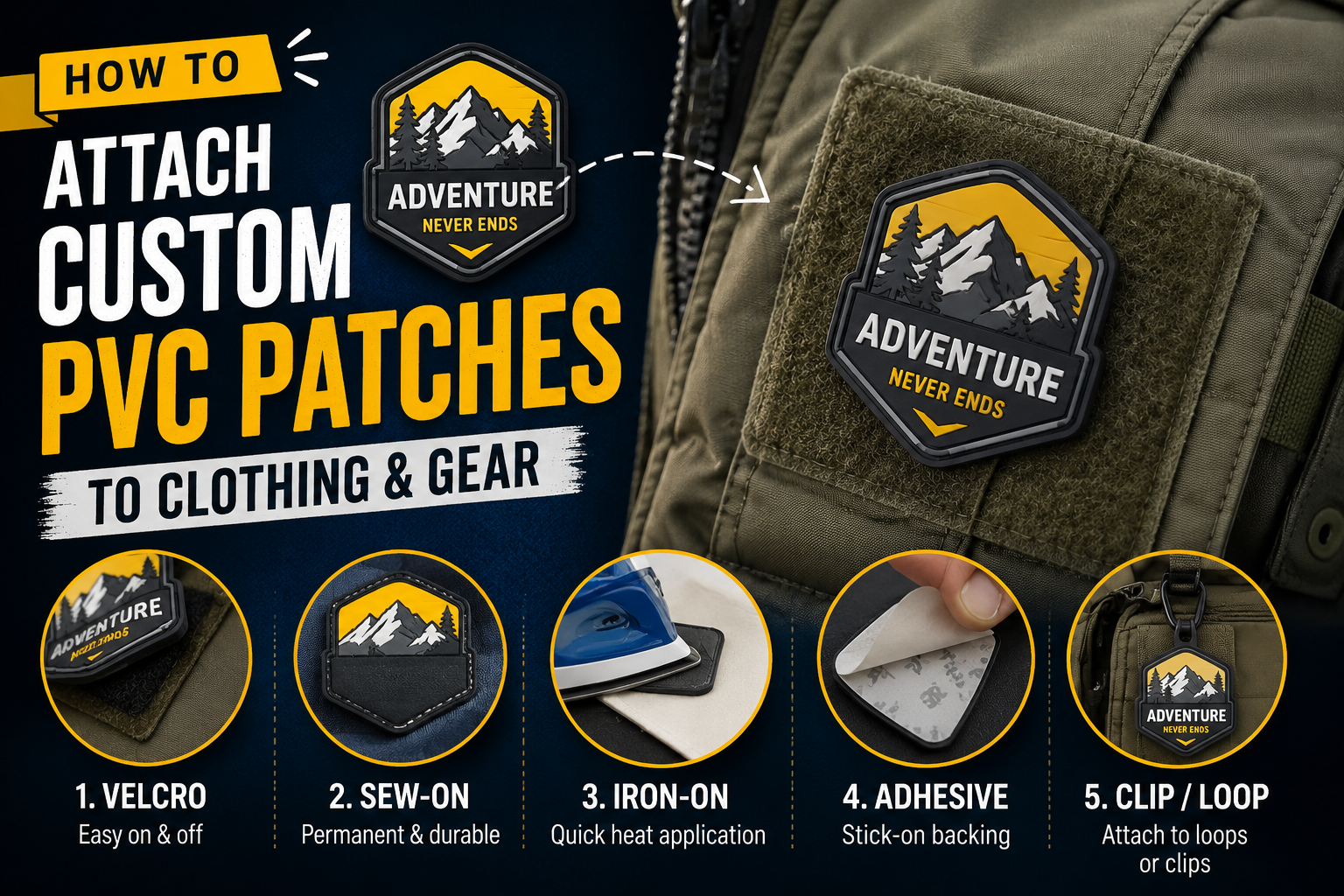
PVC patches are heavier and less flexible than fabric, so attaching them correctly takes a slightly different approach than a traditional embroidered patch. Here is how to do it right depending on the backing.
Sew-On PVC Patches
- Use a heavier duty needle, since PVC is thicker and denser than embroidered fabric
- Stitch through the pre-punched holes along the patch edge if the design includes them
- Sew slowly and keep tension even, since PVC does not stretch the way fabric does
- A sewing machine handles PVC more evenly than hand stitching for larger patches
Velcro-Backed PVC Patches
Velcro is one of the most popular backing choices for custom PVC patches, especially on tactical and uniform gear where patches change often.
- Sew the hook strip onto the garment or gear in the intended location
- Press the patch firmly onto the strip and check that it sits flat with no lifted corners
- Reposition as needed since velcro allows the patch to be removed and swapped freely
Adhesive-Backed PVC Patches
- Clean and dry the surface fully before applying, since dust or moisture weakens the bond
- Press firmly and hold for 30 to 60 seconds to activate the adhesive
- Allow the patch to cure for a few hours before flexing or washing the item
- Best suited for light use rather than daily wear or frequent washing
Common Mistakes to Avoid
- Ironing a PVC patch directly, which can melt or warp the material
- Sewing too tightly, which can crack the plastic along the stitch line
- Applying adhesive backing to a curved or textured surface without enough pressure to seat it fully
- Skipping a test placement before committing to permanent stitching
Caring for a PVC Patch Once Attached
Machine washing is generally fine for sew-on PVC patches, though cold water and a gentle cycle help preserve the finish over time. Avoid high heat drying, which can soften the plastic and cause it to warp.
Frequently Asked Questions
Can I iron on a PVC patch?
No. PVC is a plastic material and direct heat from an iron can melt or distort it. Sew-on, velcro, or adhesive backing are the appropriate options for PVC patches.
Do I need a special needle to sew a PVC patch?
A heavier duty needle designed for thick or dense materials makes the process easier and reduces the risk of a broken needle or uneven stitching.
How long does adhesive backing last on a PVC patch?
Adhesive backing is best for light or temporary use. For anything worn regularly or washed often, sew-on or velcro backing holds up significantly longer.
Can a PVC patch be removed without damage?
Velcro-backed patches can be removed cleanly at any time. Sewn or adhesive patches are more difficult to remove without leaving marks or residue.
Ordering a PVC patch for gear that sees regular use?
Request a free quote through Patch Makers Hub to get the right backing built in from the start.