


Custom PVC Patches vs Rubber Patches: What's the Difference?
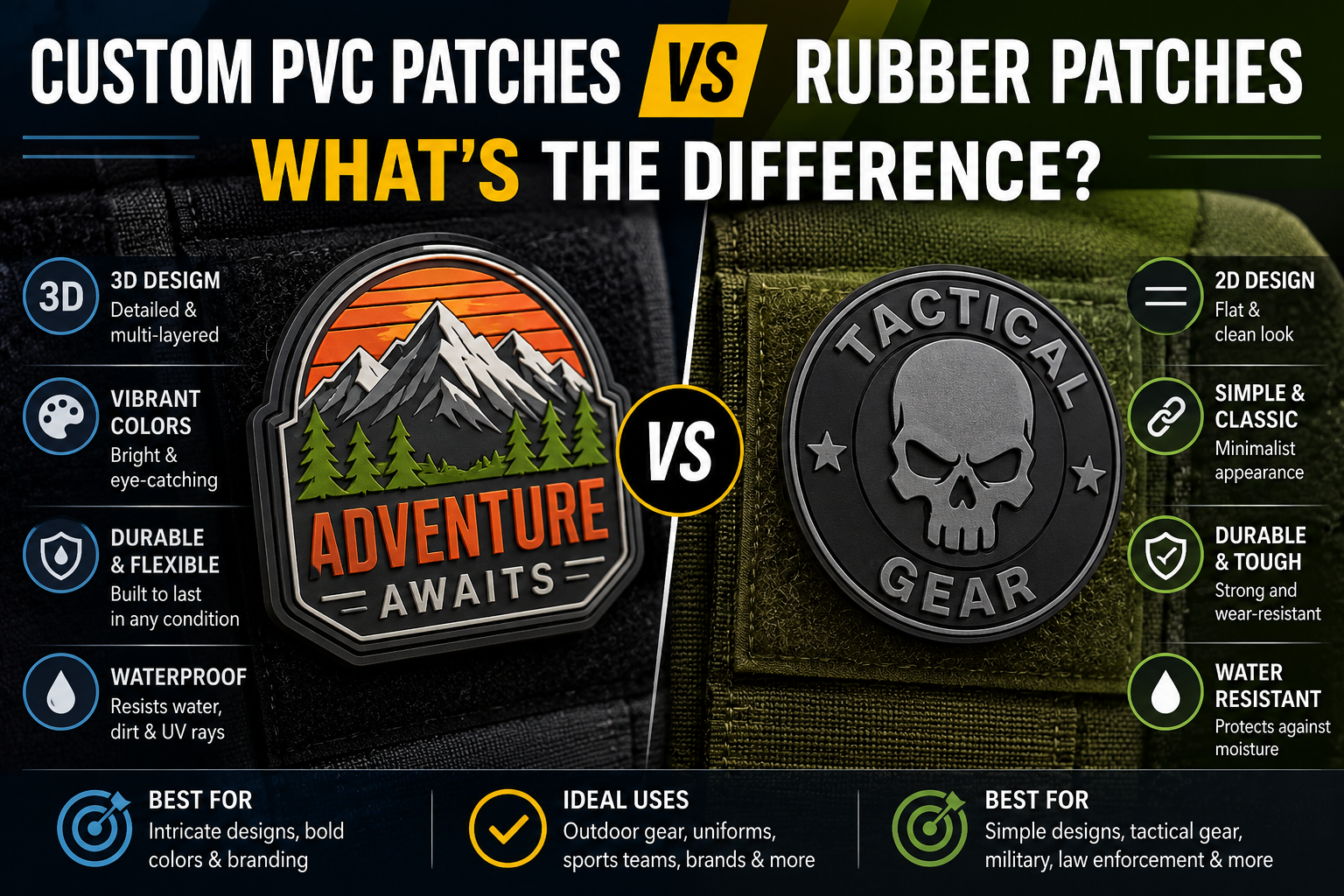
In everyday conversation, custom PVC patches and rubber patches are often used interchangeably, and in most cases they refer to the same product. But there are a few real distinctions worth understanding before placing an order.
Why the Terms Get Used Interchangeably
PVC, or polyvinyl chloride, has a soft, flexible, rubber-like texture and appearance. Because of that resemblance, most suppliers and customers casually call these patches rubber patches even though true natural or silicone rubber is a different material.
True Rubber and Silicone Patches
When a supplier does mean genuine rubber or custom leather patches-adjacent materials rather than PVC, the patch is usually made from silicone or a similar synthetic rubber compound. These patches share PVC's flexibility and water resistance but can have a slightly softer, matte finish compared to PVC's typically glossier surface.
Key Differences to Ask About
- Finish: PVC tends to have a smoother, glossier surface, while true rubber or silicone often has a softer, matte texture
- Color vibrancy: PVC generally holds brighter, more saturated colors due to the injection molding process
- Flexibility: both bend well, though silicone can feel slightly softer to the touch
- Cost: pricing is usually similar, though it varies by supplier and order size
What Matters More Than the Label
For most buyers, the practical differences between PVC and true rubber patches are small enough that they rarely change the decision. What matters more is confirming with the supplier:
- How many colors the material supports
- Whether the finish will be glossy or matte
- How the patch performs in cold weather, since some rubber-like materials stiffen more than others
- What backing options are available for the material
When to Choose PVC or Rubber Over Embroidery
Both PVC and true rubber patches outperform custom embroidered patches in wet or rugged outdoor conditions and support sharper, more detailed artwork. Embroidery remains the better choice when a traditional, textured, fabric look is the goal.
Frequently Asked Questions
Is a rubber patch the same as a PVC patch?
In most cases, yes. Suppliers commonly use rubber patch and PVC patch to describe the same product, though true silicone rubber patches do exist as a distinct, softer alternative.
Which lasts longer, PVC or rubber?
Both are highly durable outdoors. PVC is slightly more common for long term durability due to its glossy, weather-resistant surface, but well-made silicone patches hold up comparably well.
Can PVC and rubber patches be made in the same order?
Most suppliers work primarily in PVC and can advise if a true rubber or silicone alternative is available and worth the difference for a specific project.
Do PVC patches crack in cold weather?
High-quality PVC is formulated to stay flexible in cold conditions, though extreme or prolonged cold can reduce flexibility over time in any rubber-like material.
Not sure which material fits your project?
Request a free quote and Patch Makers Hub can walk through the options based on your design and environment.