


Why Embroidered Patches Cannot Reproduce Gradients
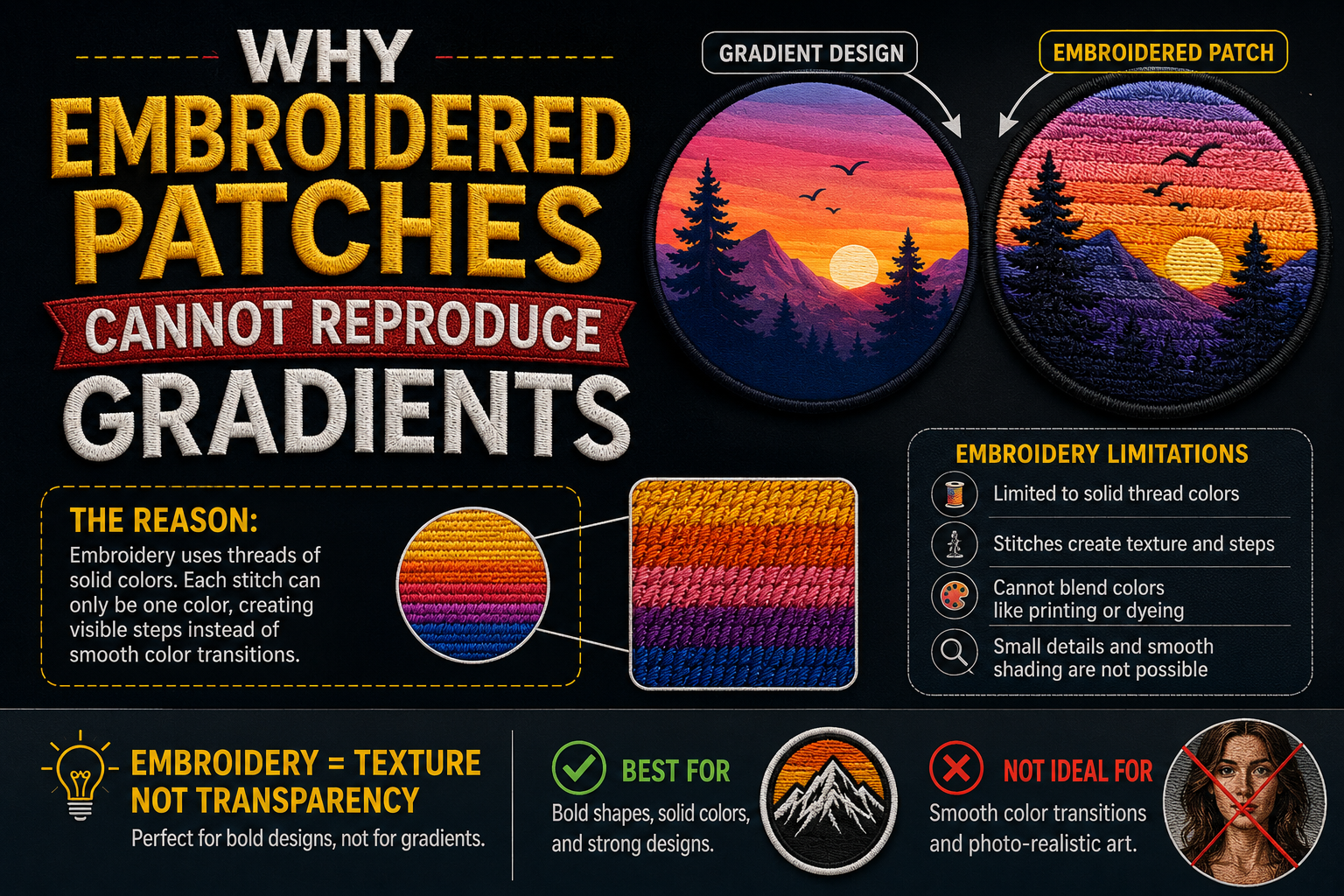
Gradients are everywhere in modern logo design, smooth transitions from one color into another that look great on a screen or printed page. When that same logo needs to become an custom embroidered patch, gradients are almost always the first thing that has to change, and understanding why helps set the right expectations before production starts.
Thread Is a Physical Material, Not a Pixel
A digital gradient blends millions of individual color values smoothly across a shape. Thread cannot do this because each strand is a single solid color. Embroidery builds an image from discrete stitches, so any color transition has to happen in visible steps rather than a seamless blend.
How Digitizers Approximate a Gradient
To suggest a gradient effect, digitizers sometimes blend thread colors by alternating stitches between two shades in a technique called color blending or shading. This can create a rough approximation of a transition at a distance, but it will never look as smooth as a true printed gradient, and it works best on larger patches with more room for the technique.
Where This Matters Most
Logos with sky backgrounds, sunset effects, or glossy 3D-style shading are the most affected by this limitation. These elements typically need to be simplified into flat, solid color blocks for embroidery, which changes the visual feel of the logo more than most clients initially expect.
Alternatives Worth Considering
For designs that depend heavily on gradient effects, woven patches can render finer detail and smoother color transitions than embroidery, since the flat woven construction allows for thinner thread and tighter weaves. Printed patches are another option when the gradient itself is essential to the brand identity.
Setting Expectations Before Digitizing
The best time to address a gradient issue is before digitizing begins, not after a first sample comes back looking different than expected. Reviewing a mockup and discussing which areas will be flattened into solid color avoids surprises once the patch is in production.
Gradients are simply outside what embroidery thread can physically do, and knowing this upfront makes it much easier to adapt a logo successfully rather than being disappointed by the first sample.
Frequently Asked Questions
Can any embroidery technique create a real gradient?
Not a true seamless gradient, though thread shading techniques can approximate a soft transition on larger patches.
Should I redesign my logo if it has a gradient?
Not necessarily. A digitizer can usually adapt the gradient areas into flat color blocks while keeping the rest of the logo intact.
Is there a patch type that handles gradients better than embroidery?
Woven and printed patches generally reproduce fine gradients and detail more accurately than embroidery thread can.
If your logo relies on smooth color transitions, our page on what are custom woven patches explains how that construction handles detail differently, and our article on how many colors can an embroidered patch have covers a related limitation worth planning around.
Patch Makers Hub reviews every logo for gradient and detail issues before digitizing begins, so there are no surprises once production starts.